
 Suomi

-2%
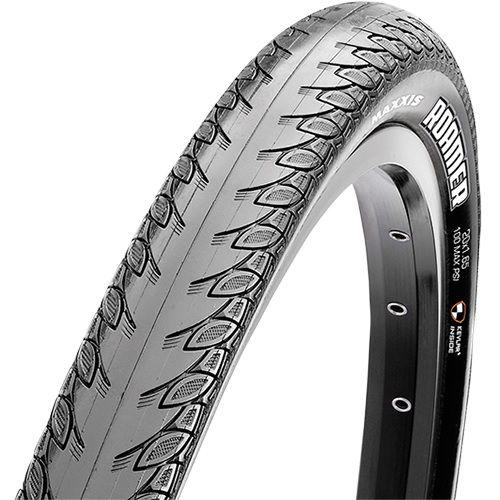
Maxxis Roamer 700x42C, Wire
Original price was: €25,30.€24,90Current price is: €24,90.
The Roamer is ready for anything: from the daily commute to a grocery run or a long weekend tour on gravel roads. The smooth center rolls fast, and the leaf-like tread on the shoulders adds a little extra grip in corners. For worry-free miles, the Roamer features a durable compound, a 60 TPI casing and... Read more
We don’t ship to this country.
Shipping a bike may cost more. You will see the final price at checkout.
Country not on the list? Unfortunately we don’t ship there.
Read the delivery terms
RUBBER COMPOUNDS
The tread compound is arguably the most important part of a tire. By changing the amounts of the different ingredients in the rubber, engineers can make two identical-looking tires perform completely differently. Below is a list of Maxxis compounds and their characteristics.
•SINGLE COMPOUND: One compound across the whole tread, optimized for longevity and performance.
•DUAL COMPOUND: Two compounds in the tread of mountain bike tires for lower rolling resistance and better cornering grip.
•TRIPLE COMPOUND: Three compounds arranged in the tire for extreme, uncompromising race performance.
Both single and dual compound tires are durable and reliable tires for versatile all-round use. They are slightly more affordable, and their slightly harder compound copes with winter frost without problems.
MAXXSPEED COMPOUND: 3CS MaxxSpeed is our top-level compound for XC racing. It is a high-silica compound that reduces rolling resistance while improving grip in the wet. Used mainly in fast XC race tires, it is designed to roll as fast as possible.
3C MAXXTERRA COMPOUND: Thanks to their harder center knobs, 3CT tires roll well and are relatively hard-wearing. This makes them well suited for versatile trail riding in both dry and wet conditions.
3C MAXXGRIP COMPOUND: The 3CG compound uses the grippiest and slowest-rebounding rubber found in Maxxis tires. This high-grip compound is the same one used by top World Cup Downhill and Enduro World Series athletes. Compared to other 3C tires, it has a considerably thicker layer of soft, tacky rubber on the outer layer of the knobs. Designed for racing in all conditions above +4 °C. When nothing else grips, MaxxGrip does.
NOTE! The soft surface layers of 3C tires harden in cold weather. This has a negative effect on grip and performance, and small surface cracks may appear in the tread. For riding in cold weather and winter, we recommend dual compound tires made from a harder compound.
TIRE CONSTRUCTION
BEAD
The bead holds the tire on the rim when the tire is inflated.
•WIRE BEAD: Stiff steel wire is used as the bead material where maximum durability and an affordable tire are required.
•FOLDABLE BEAD: Foldable beads also hold the tire on the rim, but are lighter and easier to carry. Tires with a foldable bead conform better to the terrain and roll more easily. The bead is made of spun aramid fibers.
CASING
•SINGLE-PLY CASING (Single Wall): One layer of nylon wrapped around the tire from bead to bead. A single-ply casing conforms well to the terrain and is lighter.
•DUAL-PLY CASING (Double Wall): Two layers of casing material from bead to bead provide extra protection and sidewall damping for a calmer ride. For enduro, e-bike and downhill use (DoubleDown and Downhill tires).
TUBELESS READY (TR)
Maxxis Tubeless Ready (TR) tires offer better grip, lower rolling resistance and fewer flats when used with a tubeless sealant such as Stan′s. You can run lower pressures to improve grip and control. Look for the ″TR″ marking on the sidewall.
Installation note: Must be used with tubeless-compatible rims and tubeless sealant to maintain air pressure and seal small pores. Check and top up the sealant regularly, as it dries over time.
Important: Use sealant only in tires marked ″TR″. Using it in other Maxxis models voids the warranty.
PUNCTURE PROTECTION & CASING TECHNOLOGY
THREADS PER INCH (TPI)
The number of threads that run through one square inch of a single casing ply. A lower TPI (e.g. 60 TPI) gives better puncture, cut and abrasion resistance as well as damping, but is heavier. A higher TPI (e.g. 120 TPI) conforms better to the terrain, giving a smoother and more comfortable ride while reducing weight. The downside is that higher-TPI casings are more fragile than lower-TPI casings. When the terrain gets rough and the speed goes up, the tire can also feel ″bouncy″ compared to a 60 TPI version.
Maxxis TPI ratings refer to the number of threads per inch in a single casing ply, unlike the ratings of some competitors.
SILKWORM
Silkworm is an exclusive material incorporated into the casing of selected models to add puncture and cut protection. Silkworm sits under the tread as a protective layer.
ZK
ZK is a new-generation puncture protection material that is lighter, more flexible and stronger than earlier materials such as K2. Maxxis typically uses ZK as a protective layer under the center of the tread in road tires.
EXO PROTECTION
EXO is a cut-, puncture- and abrasion-resistant material added to the sidewalls of many Maxxis mountain bike and gravel tires. This densely woven fabric is light and highly flexible, so tire performance remains unchanged. Choose EXO protection for improved durability in gravel, XC and trail riding.
EXO+ PROTECTION
EXO+ is Maxxis′ mid-level puncture protection option, suited to general trail riding and light e-bikes. We start with a durable 60 TPI casing, add the legendary EXO puncture protection layer to the sidewalls and finish with a small butyl insert around the bead. The durable casing and EXO material fend off damage from rocks and roots, while the butyl insert protects the tire against impacts (so-called snakebites / pinch flats) and helps prevent rim damage.
DOUBLEDOWN (DD) PROTECTION
DoubleDown (DD) is our casing solution for bike parks, enduro racing and e-bikes. Two layers of light 120 TPI casing material are combined with a butyl sidewall insert, creating an extremely durable tire with a more sensitive trail feel than a Downhill casing tire. DoubleDown tires are slightly lighter than their Downhill counterparts, but the real difference is in the ″trail feel″. Some riders may prefer the heavily damped ride of a Downhill casing tire.
DOWNHILL (DH)
As the name suggests, Maxxis Downhill casing tires are designed for extreme use in all gravity applications, from downhill to bike park riding, freeride and heavy e-bikes. A Maxxis Downhill tire is made of two layers of durable 60 TPI casing material together with a large butyl insert extending from the bead into the sidewall. The butyl insert helps prevent impact flats, protects the rim from impacts and gives extra stability to the sidewalls.
Which tire for your bike?
See our mountain bike tire selection guide (in Finnish): https://www.hi5bikes.fi/2022/01/27/maxxis-maastorenkaat-valintaopas/
Maxxis tire markings explained (in Finnish): www.hi5bikes.fi/maastopyoran-renkaat-ominaisuudet/
| Diameter | |
|---|---|
| Tire Construction | |
| Tubeless | |
| Compound | |
| Model | |
| Material | |
| Brand | |
| Protection | |
| Width | |
| EAN | 4717784025346 |
Only logged in customers who have purchased this product may leave a review.
Related products
-14%
Out of stock
Maxxis
Original price was: €28,80.€24,90Current price is: €24,90.
€29,90
€34,90
€39,90
-18%
Maxxis
Original price was: €36,40.€29,90Current price is: €29,90.
€29,90
€34,90

Out of stock
Schwalbe
€40,90
 Electric Bikes
 Outlet
 View All Outlet
Reviews
There are no reviews yet.